









Always in sync, even across episodes
No more "wait, let me pause" moments. Our sync engine keeps everyone frame-perfect—even when you binge multiple episodes in one party.
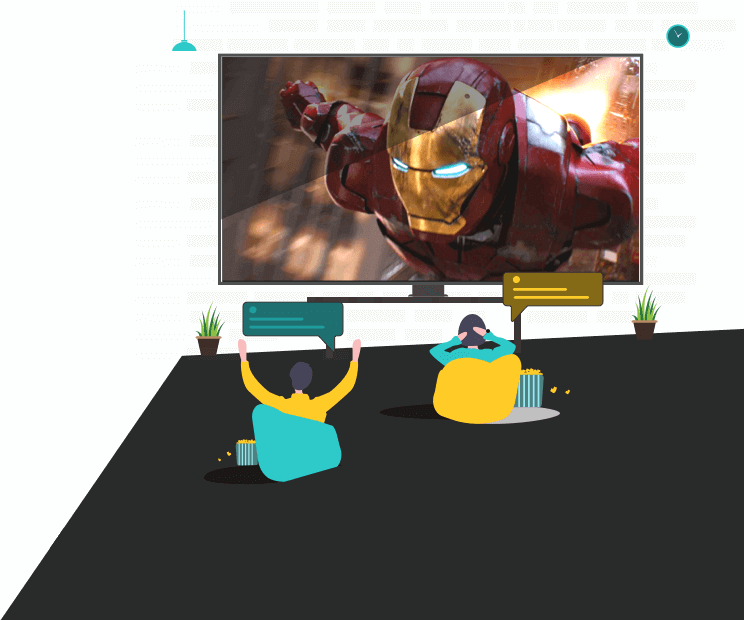
Start playing any video on Netflix, Disney+, or 10+ supported platforms.
Click the Flickcall logo on top right once video starts or hit the Flickcall icon on chrome toolbar. Your watch party is ready in one click.
Copy the party link and send it to your friends. They join with one click—no sign-up required.
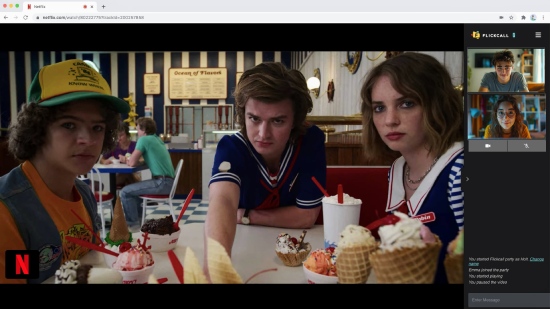
Create watch parties on Netflix, Disney+, JioHotstar, JioHotstar, HBO Max, MAX, Hulu, Prime Video, Youtube, Zee5, Sony Liv, JioHotstar with Flickcall.

No more "wait, let me pause" moments. Our sync engine keeps everyone frame-perfect—even when you binge multiple episodes in one party.

Catch your friends gasping at plot twists. Share laughter in real-time. Video chat makes every watch party feel like you're on the same couch.

Install the extension, play any video, click the Flickcall icon. That's it—share the link and you're watching together.
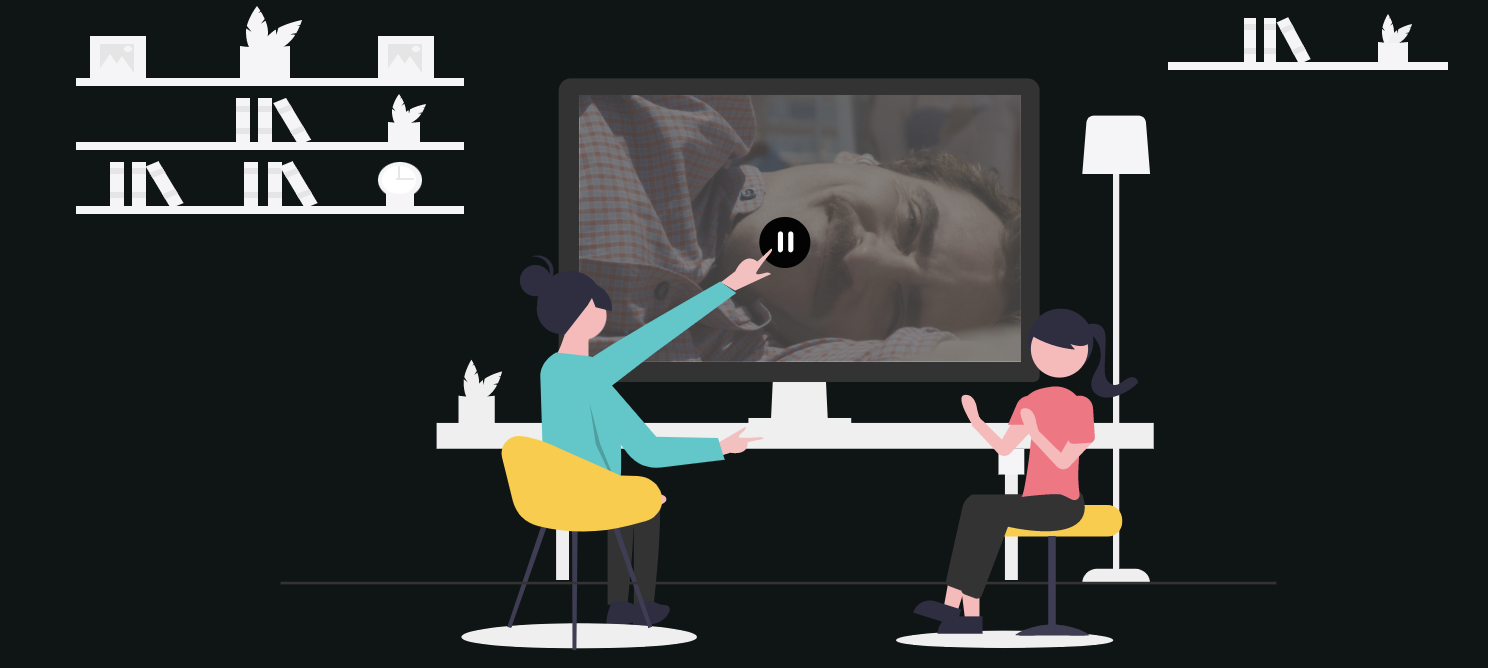
When you pause video, your mic unmutes. When you play, it mutes. Smart Mic knows when you need to talk. No fumbling with buttons, just natural conversation.
We use peer-to-peer technology to connect you directly with your friends. Your video calls and chats are never routed through our servers unless direct connection is blocked*.
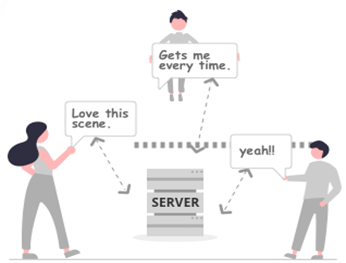
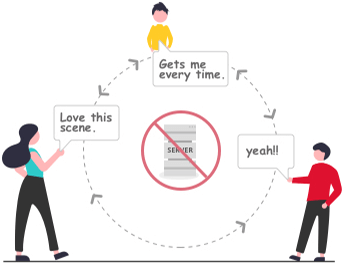
* In some cases, firewall setting doesn't allow direct connection, the calls and messages are encrypted and transmitted via routing servers.
Here’s a solid, concise post about — the cracking or weakening of trade union power, influence, or unity. You can use this for social media, a blog, or a discussion forum. Title: Understanding "Union Crax": Why Solidarity Is Cracking
It’s not an official term, but it describes a real and growing phenomenon: the slow fracturing of traditional labor unity. Here’s what it looks like in practice:
You’ve heard of a "union jack" — but what about ?
Unions were built to turn “me” into “we.” Union Crax is what happens when “we” forgets why it came together in the first place.
✅ Internal democracy that doesn’t turn into infighting ✅ Cross-union solidarity agreements before the crisis hits ✅ Focus on a shared enemy — not each other’s differences
👉 Are you seeing signs of Union Crax in your workplace or industry? Would you like a shorter version for X (Twitter) or a version focused on a specific industry (e.g., tech, teaching, logistics)?
🔹 – Gig workers vs. public sector unions fighting for the same limited political capital. 🔹 Generational splits – Older members prioritizing pension protection, younger workers fighting for housing wages and climate clauses. 🔹 Political fragmentation – Union leadership backing one party, while rank-and-file members drift toward populism or apathy. 🔹 Jurisdictional battles – Two unions fighting over who represents the same new workforce (e.g., Amazon warehouse vs. delivery drivers).
Because a cracked union can’t bargain from strength. Employers exploit these divisions: offering separate deals to different shifts, using arbitration to bypass joint action, or recognizing only the “most cooperative” faction.
Here’s a solid, concise post about — the cracking or weakening of trade union power, influence, or unity. You can use this for social media, a blog, or a discussion forum. Title: Understanding "Union Crax": Why Solidarity Is Cracking
It’s not an official term, but it describes a real and growing phenomenon: the slow fracturing of traditional labor unity. Here’s what it looks like in practice:
You’ve heard of a "union jack" — but what about ? union crax
Unions were built to turn “me” into “we.” Union Crax is what happens when “we” forgets why it came together in the first place.
✅ Internal democracy that doesn’t turn into infighting ✅ Cross-union solidarity agreements before the crisis hits ✅ Focus on a shared enemy — not each other’s differences Here’s a solid, concise post about — the
👉 Are you seeing signs of Union Crax in your workplace or industry? Would you like a shorter version for X (Twitter) or a version focused on a specific industry (e.g., tech, teaching, logistics)?
🔹 – Gig workers vs. public sector unions fighting for the same limited political capital. 🔹 Generational splits – Older members prioritizing pension protection, younger workers fighting for housing wages and climate clauses. 🔹 Political fragmentation – Union leadership backing one party, while rank-and-file members drift toward populism or apathy. 🔹 Jurisdictional battles – Two unions fighting over who represents the same new workforce (e.g., Amazon warehouse vs. delivery drivers). Here’s what it looks like in practice: You’ve
Because a cracked union can’t bargain from strength. Employers exploit these divisions: offering separate deals to different shifts, using arbitration to bypass joint action, or recognizing only the “most cooperative” faction.